Garbage Disposal Humming but Not Working? How to Fix It Safely
Garbage disposal hums but will not spin? It is usually jammed. Learn how to free it safely with an Allen wrench, reset it, and keep it from jamming again.
On this page
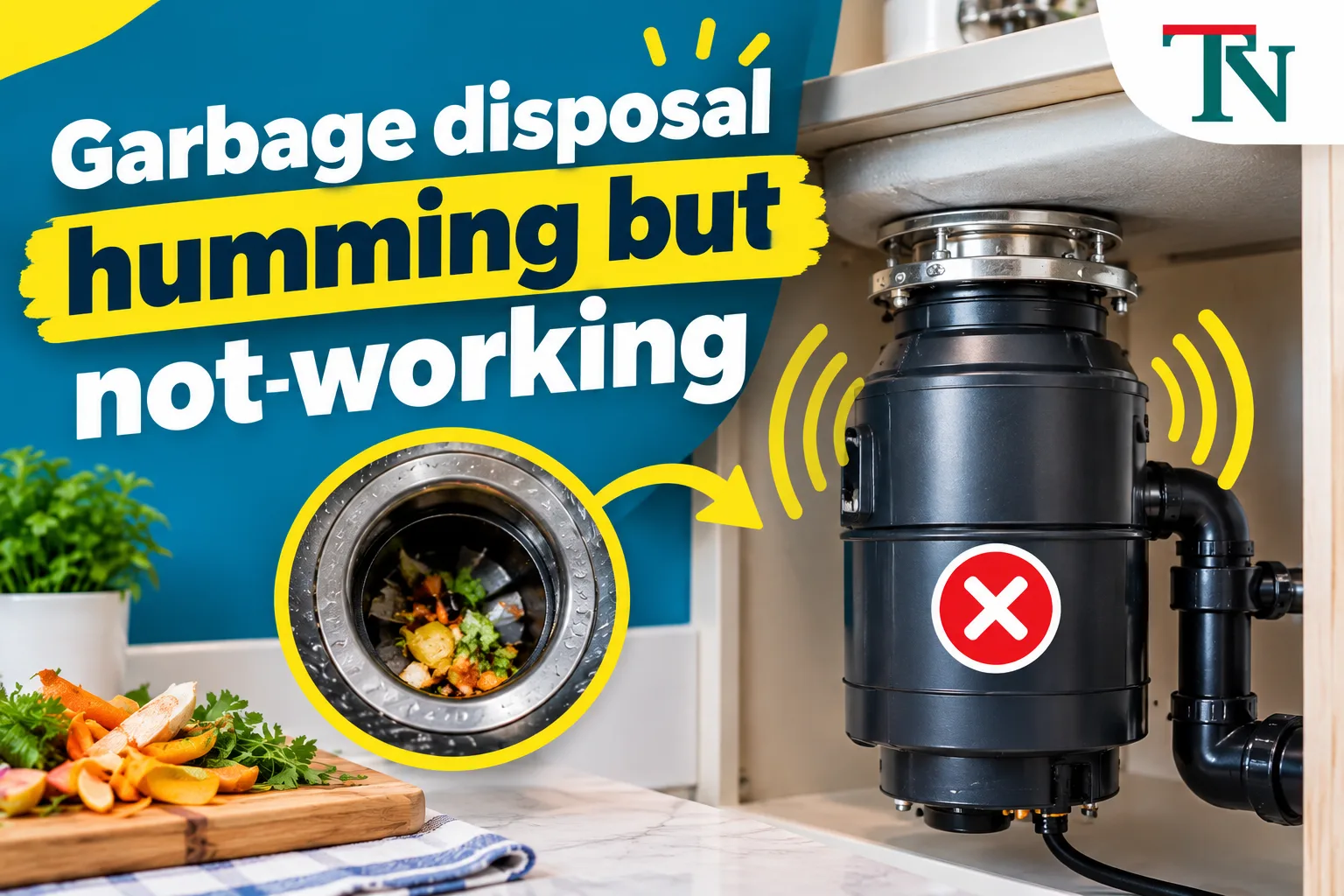
If your garbage disposal hums but does not grind, it is almost always jammed. The motor is getting power, but something hard, like a bone, fruit pit, bottle cap, or spoon, is stuck and stopping the spinning plate. The fix usually takes about 10 minutes and a small Allen wrench, with no need to call a plumber.
Turn the disposal off right now. Letting it keep humming can overheat and burn out the motor.
What you need
- A 1/4-inch Allen wrench (hex key). Many disposals come with one, often called a "wrenchette."
- A flashlight
- Tongs or needle-nose pliers
- Optional: a broom handle, if you do not have an Allen wrench
How to fix a humming garbage disposal step by step
Step 1: Turn off the power
Flip the wall switch to off. Then unplug the disposal under the sink, or turn off its circuit breaker. This makes sure it cannot turn on while you work.
Step 2: Look inside for the jam
Shine a flashlight down the drain. If you see something stuck, like a spoon, a bottle cap, or a big bone, pull it out with tongs or pliers.
Step 3: Turn the flywheel from underneath
- Look at the very bottom of the disposal, under the sink. In the center, there is a small six-sided hole.
- Put the 1/4-inch Allen wrench into the hole.
- Turn the wrench back and forth. At first it will feel stuck. Keep working it gently until it turns all the way around freely.
This turns the spinning plate inside and breaks the jam loose.
No Allen wrench? With the power off, put the end of a wooden broom handle into the drain and push against one of the blades on the plate to rock it back and forth.
Step 4: Remove the loose objects
Shine the flashlight in again and pull out anything that came loose with tongs or pliers.
Step 5: Press the reset button
Find the red or black reset button on the bottom of the disposal. If it has popped out, press it firmly until it clicks. If it will not stay in, let the motor cool for 10 to 15 minutes and try again.
Step 6: Test it
- Plug the disposal back in or turn the breaker on.
- Run cold water into the sink.
- Turn on the disposal.
It should spin freely. Let it run for 20 to 30 seconds with the water on to flush out any small pieces.
If the disposal does not make any sound at all
A silent disposal has a different problem: it is not getting power.
- Press the reset button on the bottom. This is the most common fix.
- Check the circuit breaker and reset it if it tripped.
- Check for a GFCI outlet (one with Test and Reset buttons) under the sink or on the counter. Press Reset.
- Make sure it is plugged in firmly.
- Test the wall switch. If the switch is loose or broken, it may need to be replaced by an electrician.
If it still makes no sound, the motor may have failed.
If it hums again right after you free it
- Something is still stuck. Look again with a flashlight, and turn the flywheel with the Allen wrench again.
- The motor bearings are seized. If the plate turns freely by hand but the disposal still only hums, the motor may be worn out. The disposal will likely need to be replaced.
- It is overheating. Let it cool, press reset, and try again with cold water running.
Disposal problem finder
| What happens | Most likely cause | What to do |
|---|---|---|
| Hums, does not spin | Jammed plate | Power off; turn the flywheel with an Allen wrench |
| No sound at all | Tripped reset button, breaker, or GFCI | Press reset; check the breaker and GFCI |
| Runs, then stops suddenly | Overheating or overload | Let it cool; press reset; grind smaller amounts |
| Spins but water drains slowly | Clogged drain line | Clear the sink drain or trap |
| Water leaking underneath | Loose connection or cracked housing | Tighten connections; replace if the unit is cracked |
| Grinding metal sounds | Utensil or hard object inside | Power off and remove it with tongs |
What not to put in a garbage disposal
Most jams and clogs come from putting the wrong things down the drain. Avoid:
- Grease, oil, and fat. They harden and clog pipes.
- Bones and fruit pits. They are too hard to grind.
- Stringy vegetables, like celery, corn husks, and onion skins. They wrap around the plate.
- Pasta, rice, and bread. They swell with water and form a paste.
- Coffee grounds. They build up in pipes over time.
- Non-food items, like bottle caps, twist ties, and paper.
How to keep your disposal working well
- Run cold water before, during, and for 20 to 30 seconds after using it. Cold water keeps grease solid so it can be chopped and flushed.
- Feed food in slowly, a little at a time.
- Use it often. Running it regularly helps stop rust and jams.
- Clean it by grinding a few ice cubes, then a few lemon or orange peels for a fresh smell.
- Never use chemical drain cleaners. They can damage the disposal and pipes.
Garbage disposal smells bad?
Food bits stuck under the rubber splash guard and on the grinding plate rot and smell. To clean it:
- Turn off the power.
- Lift the rubber splash guard and scrub underneath with an old toothbrush and dish soap.
- Turn the power back on. Drop in a handful of ice cubes and a little baking soda, run cold water, and grind for 20 to 30 seconds.
- Finish with a few lemon or orange peels.
Do this every week or two to keep smells away.
Does your disposal affect your dishwasher?
In many kitchens, the dishwasher drains through the garbage disposal. A jammed or clogged disposal can stop your dishwasher from draining. Our guide on fixing a dishwasher that will not drain explains this. A dirty disposal can also make your kitchen sink smell. If the smell is like a sewer, see what causes a sewer smell in the kitchen or bathroom.
When to call a plumber
Call a plumber or replace the disposal if:
- It still hums after you free the flywheel and press reset
- Water leaks from the body of the disposal
- The reset button keeps popping out
- It makes loud grinding or rattling noises with nothing inside
- It is more than about 10 to 12 years old and giving you frequent trouble
Repair or replace?
Garbage disposals do not last forever. Angi says most last about 10 to 15 years, depending on how much you use them and how you care for them.
| Situation | Best choice |
|---|---|
| Hums because of a jam, and it is under 8 years old | Free the jam and keep it |
| Trips the reset button often | Find the cause, or replace if it is old |
| Leaks from the bottom of the unit | Replace. The seals or housing have failed |
| Grinding or loud metal noise that does not stop | Replace if older than about 10 years |
| Repair costs more than half the price of a new one | Replace |
A new disposal with professional installation often costs about $150 to $400, depending on the model and where you live.
Why a leak from the bottom means replacement
Water dripping from the very bottom of the disposal usually means the inside seals have worn out or the body has cracked. These parts cannot be fixed. Turn off the power at the breaker before you look, since water and electricity do not mix, and put a bowl under the drip until a new unit goes in.
Choosing a new disposal
- 1/3 horsepower: fine for one or two people with light use.
- 1/2 horsepower: a good fit for most families.
- 3/4 horsepower or more: for big families or people who cook a lot. These jam less often.
Many people can swap a disposal in a couple of hours if the new one uses the same mount. If you are not comfortable with the wiring, hire a plumber or electrician.
The 10-minute fix in short
Turn the power off, look for a stuck object, and turn the flywheel from underneath with a 1/4-inch Allen wrench until it moves freely. Remove anything loose, press the reset button, and test it with cold water running. To stop it from jamming again, keep grease, bones, and stringy foods out of it.
Sources
This guide was checked against these official and manufacturer sources.
Frequently asked questions
Why does my garbage disposal hum but not spin?
A humming disposal that does not spin is almost always jammed. Something hard, like a bone, fruit pit, or utensil, is stuck between the spinning plate and the grinding ring. The motor is getting power but cannot turn. Turn off the power and free it with an Allen wrench from underneath.
Where is the reset button on a garbage disposal?
Most disposals have a small red or black reset button on the bottom of the unit, under the sink. If the disposal overheats or jams, this button pops out. Press it in firmly until it clicks.
Is it safe to put my hand in the garbage disposal?
No. Never put your hand in a disposal, even when it is off. Turn off the power at the switch and unplug it or switch off the breaker, then use tongs or pliers to remove objects.
How long should I let a humming disposal run?
Turn it off right away. Letting a jammed disposal hum can overheat and burn out the motor. Turn off the power, free the jam, and press the reset button before trying again.

Written by
Agha Ali Abbas
Agha Ali Abbas is the founder and editor of TimeToNote. He has worked in SEO and content writing for 18 years, and he checks every guide against manufacturer documentation and official sources before it goes live.
Related guides
Home Problems
Why Is My Dishwasher Not Draining? 9 Causes and Easy Fixes
Water sitting in the bottom of your dishwasher? Learn why it will not drain and how to fix it yourself, from cleaning the filter to checking the drain hose.
8 min read
Home Problems
Why Does My House Smell Like Sewage? 9 Causes and Easy Fixes
A sewage smell in your house usually comes from a dry drain trap, a bad toilet seal, or a blocked vent. Find the cause fast and fix it with these simple steps.
11 min read
Home Problems
Why Is My Dishwasher Leaving White Residue on Dishes? 8 Fixes
Dishwasher leaving a white film or residue on dishes? Learn if it is hard water or etching, how to test it with vinegar, and 8 fixes that work.
8 min read